Ice Covered Branches – Do’s and Don’ts

Protecting Trees With Ice Covered Branches

With ice forecasted in the Omaha area, your first concern is likely how road conditions and your commute might be affected. However, ice covered branches can pose serious risks to trees, homes, and surrounding property during winter storms. Trees often go unnoticed until damage occurs, such as broken limbs, split trunks, or, in extreme cases, a tree falling onto a roof.

While salting your sidewalk or driveway, you may notice branches throughout your landscape coated in ice. At that point, knowing what to do—and what not to do—can make a significant difference in how well your trees recover. In these situations, prevention and proper response are key.
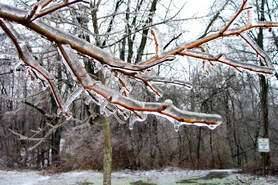
ice covered branches

Photo by George Bosela

What Not to Do With Icy Tree Branches

It may seem helpful to shake ice off branches, but this can cause more harm than good. Branches coated in ice become brittle, and sudden movement increases the likelihood of breakage. Shaking limbs can also damage a tree’s internal circulatory system.

Although ice adds weight, branches naturally bend and flex to accommodate the load when ice accumulates gradually. In most cases, healthy branches can withstand this pressure. Younger trees generally handle ice storms better than older trees, which may already have structural weaknesses.

How to Prevent Tree Damage From Ice Covered Branches

Taking preventative steps greatly increases a tree’s resilience during ice events.

1. Structurally Prune Trees Early


Proper structural pruning from a young age helps prevent failures caused by ice covered branches. Pruning reduces crossing limbs, narrow branch angles, and weak branch attachments. Trees such as pear and autumn blaze maple often experience damage because of their narrow branch structure.

A Certified Arborist can guide early pruning—typically beginning around five years of age—to promote a strong central leader. Preventing co-dominant stems and included bark early reduces the likelihood of branch failure during ice storms.


2. Avoid Planting Trees Prone to Ice Damage


Some trees are more susceptible to storm-related breakage. These include:

·       Trees with upright branching habits, such as arborvitae

·       Multi-stem or clump-form trees like river birch

·       Fast-growing species such as maple, compared to slower-growing oak

·       Trees that naturally form narrow branch angles, including pear, autumn blaze maple, and silver maple

Choosing structurally strong species reduces long-term risk.

3. Prune Damaged Branches Carefully 


If branches fail during an ice storm, how the damage is handled matters. Do not pull or tear a partially broken limb. Avoid cutting into the trunk if the branch has torn back to the base.

Trees rely on natural processes to seal wounds and limit decay. Improper pruning cuts can interfere with these defenses and lead to long-term health issues.

4. Call a Certified Arborist 


If you are unsure how to safely manage storm-damaged branches, contact a Certified Arborist. Arborists are trained in tree biology, structural pruning, and storm damage response. Without proper tools or experience, attempting repairs can be dangerous and may cause further harm.

5. Schedule Regular Tree Inspections


Routine inspections help identify structural weaknesses before ice storms occur. Annual evaluations are ideal. An experienced arborist can spot cracks, poor branch attachments, and early signs of failure that homeowners may overlook.

6. Contact the Utility Company When Necessary


If branches are within ten feet of power lines, contact your local utility company. Energized limbs are visually indistinguishable from non-energized ones, and handling them poses a serious safety risk. When in doubt, prioritize safety.

Latest Posts

You Might Also Like